OR, where all our data is: [min,max]
range (statistic) is the length or distance of our data interval = max-min. Always positive. ↑ 2.25
Descriptive statistics: describe the data.
Summarize with statistics (derived, calculated from the data), tabulate (frequency distribution), graph (histogram, etc.)
Shape. Center. Spread. Outliers.
| Data | ||||||||
|---|---|---|---|---|---|---|---|---|
| Qualitative (nominal, categorical)
words | Quantitative
numbers | |||||||
| ||||||||
Levels of measurement
| Level (scale) | Examples | What can do with | |
|---|---|---|---|
| Nominal | names, labels, categories: (classifying) |
[binary/dichotomous]: Yes/No, Agree/Disagree, True/False, Have/Havenot, Success/Failure, M/F, ...
MaritalStatus, State, County, Zipcode, Major, Brand,make,model,color, Place race,religion,party,ideology,species,nationality,language, style TaxFilingStatus, Blood type, Housing type, Pet | Count/tally each category. Relative frequency. Mode. Bar chart.
Chi-square Tests (independence, goodness-of-fit) Confidence interval 1-PropZInt |
| Ordinal | orderable/rankable categories
but differences (obtained by subtraction) between data values either cannot be determined or are meaningless. | class(frosh/soph/jun/sen), trim levels, film ratings, SML,
gold/silver/bronze, letter grades, Education level,
clothing sizes, pain scales, military rank, star ratings, priority/risk levels, Mohs
Percentiles. Likert scale: Strongly disagree / Disagree / Neutral (or Unsure) / Agree / Strongly agree Very dissatisfied / Dissatisfied / Neutral / Satisfied / Very satisfied Poor / Fair / Good / Very good / Excellent 0/1-10 scales (may be Interval level ↓): pain | Above + median/quartiles, Spearman. |
| Interval | Numbers: orderable, and differences between data values can be found and are meaningful. But no natural zero (meaning none of the quantity). | Temperature C or F, Years/Dates, shoe size, IQ/SAT (or ordinal ↑), FICO, pH
0 is fakish | histogram mean median SD...
Estimation, CI: t-test, Hypothesis testing, ANOVA, correlation & regression |
| Ratio | Numbers: orderable, and differences between data values can be found and are meaningful, and natural zero (meaning none of the quantity), and ratios (eg. "twice as much") are meanginful. | Weight Height Age Length Area Volume Time Money Energy TemperatureK Angle Information BP LDL FBS BMI MPG MPH BPM DJI S&P500 counts | Above + CV, GM HM |
Measurements have some measuring unit, e.g. inches, pounds, meters, minutes, acres, grams, MPH, BPM, ng/L, ... but they are basically irrelevant for the statistical work.
Data "set" (but can have duplicates) consisting of observations/data values/measurements/datums/individuals/scores
of a person, thing or event,
all of the same meaning, e.g. weights of adults, greasiness of bags of chips, longevity of bulbs,
widget regional sales, effect of pill, number of meal served daily, car make, ...
Population: complete collection of all the measurements being considered. eg. weights of ALL adults,
greasiness of ALL bags of chips
Sample: a subset of the population.
Whole numbers vs. real (decimal) numbers: no difference calculating stats, histogram, etc.
Negative numbers: ditto. If all negative, "middles" are negative; if some positive, middles might be either or 0.
Range and SD always positive.
interval: set of continuous numbers. e.g. [1.45,3.7] on number line:
OR, where all our data is: [min,max]
range (statistic) is the length or distance of our data interval = max-min. Always positive. ↑ 2.25
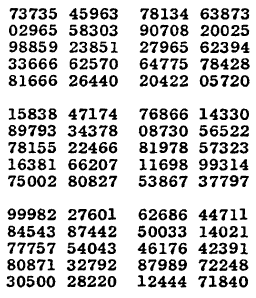
Some Triola data
Some data distros

Example: Population: weights of adults in country/county.
Not possible to census this. So need a non-biased, representative sample (a teaspoon of the pot of soup).
Ideal: Simple random sample (SRS): every adult equally-likely to be in the sample
and every sample of that size is equally-likely.
The selection procedure/method to take the sample is the "random". Randomly-taken sample.
Bad: voluntary response, convenience sample.
Collect data. Measured vs self-reported (unreliable).
Calculate/derive statistic from the data: a point estimate of the parameter.
But samples have uncertainty/variability so determine [confidence] interval estimate.
Inferential statistics: use probability to understand/quantify/describe uncertainty.
If have census, i.e. population is all known, no need to sample, just describe the population.
Sample(s) only useful/taken/needed to estimate population parameter(s).
Data in Text file (.txt, .dat) or webpage, in column (of many columns, each a different data set):
Open it or Import it in Excel. Select column, copy, then paste into other SW.
OR
Open it in Notepad and then select all (Ctrl-A) then copy (Ctrl-C) and paste into Excel.
Select column, copy, then paste into other SW.
BodyTemperatures.txt
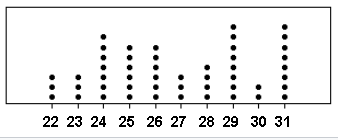
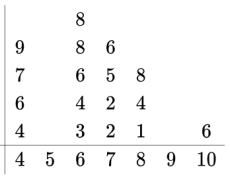
Stem-and-leaf displays.
Data: 44 46 47 49 63 64 66 68 68 72 72 75 76 81 84 88 106
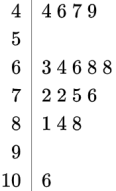
| 
| Primes<100
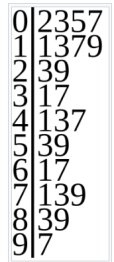
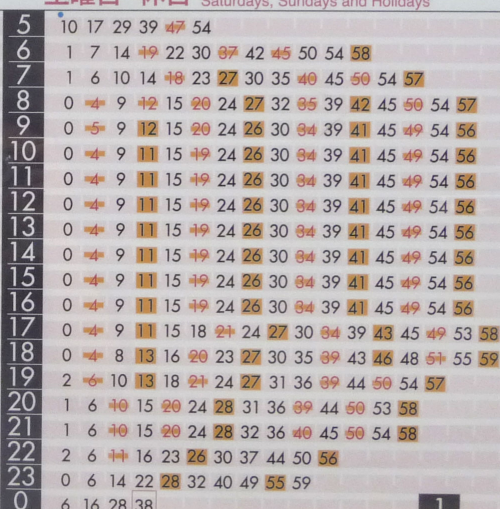
| train schedule |
|---|
Time series chart. temporal measurements. Run chart. Run-sequence plot.
Process control chart (statistical quality control).
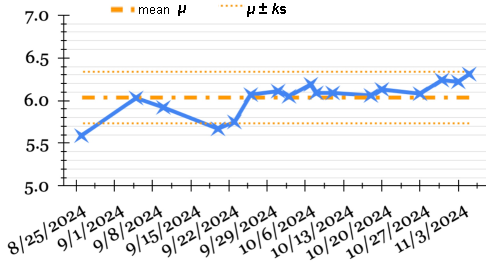
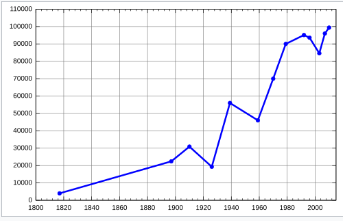
Playfair ~1800
Nightingale 1858
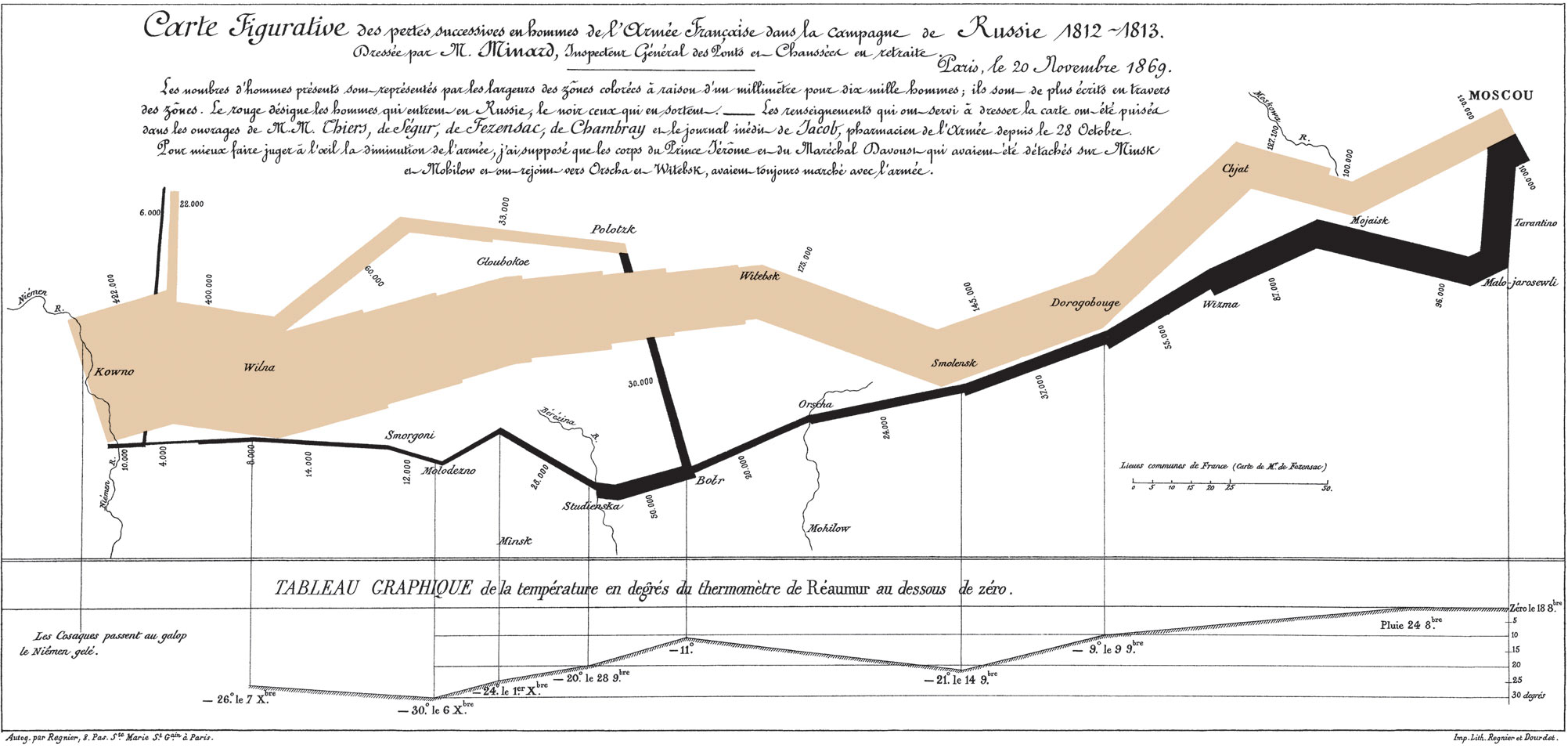
Minard 1869
Boxplot (box-and-whisker plot)
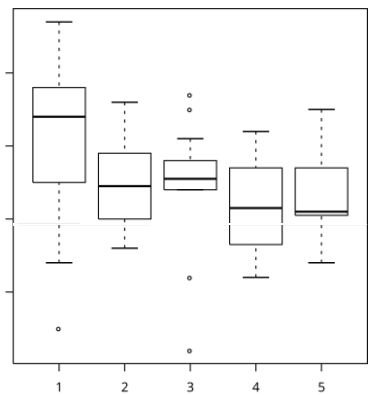
one per sample/experiment. Vertical. Side-by-side comparison. Optional: Outliers: ∘
Research papers & technical reports published each day:
| Source / Type | Estimated annual output | Per day (approx.) |
|---|---|---|
| Peer-reviewed journal articles | 3.5 - 5 million | 10,000 - 14,000 |
| Conference papers | 1 - 1.5 million | 3,000 - 4,000 |
| Preprints (arXiv, bioRxiv, SSRN, etc.) | 0.6 - 0.8 million | 1,600 - 2,200 |
| Technical / government / industry reports | 0.5 - 1 million | 1,400 - 2,700 |
| Total (all scholarly + technical) | ≈ 6 - 8 million | ≈ 16,000 - 22,000 |
| Field | % that use statistics | Notes |
|---|---|---|
| Biomedical / clinical | 90-95% | Almost universal |
| Psychology / social sciences | 85-95% | Very high |
| Economics / finance | 80-90% | High |
| Biology / life sciences | 70-85% | High |
| Engineering | 50-70% | Mixed |
| Computer science | 40-60% | Many theoretical or systems papers have little |
| Physics / chemistry | 40-60% | Theoretical papers often have none |
| Mathematics / pure theory | 5-15% | Mostly proofs |
| Humanities | 5-20% | Low except digital humanities |
| Overall weighted average | ≈ 65-75% | — |
computer PRNG (pseudo-random number generator) : 9 quadrillion of them (@1/s → 285M years)
Each pixel randomly black or white:
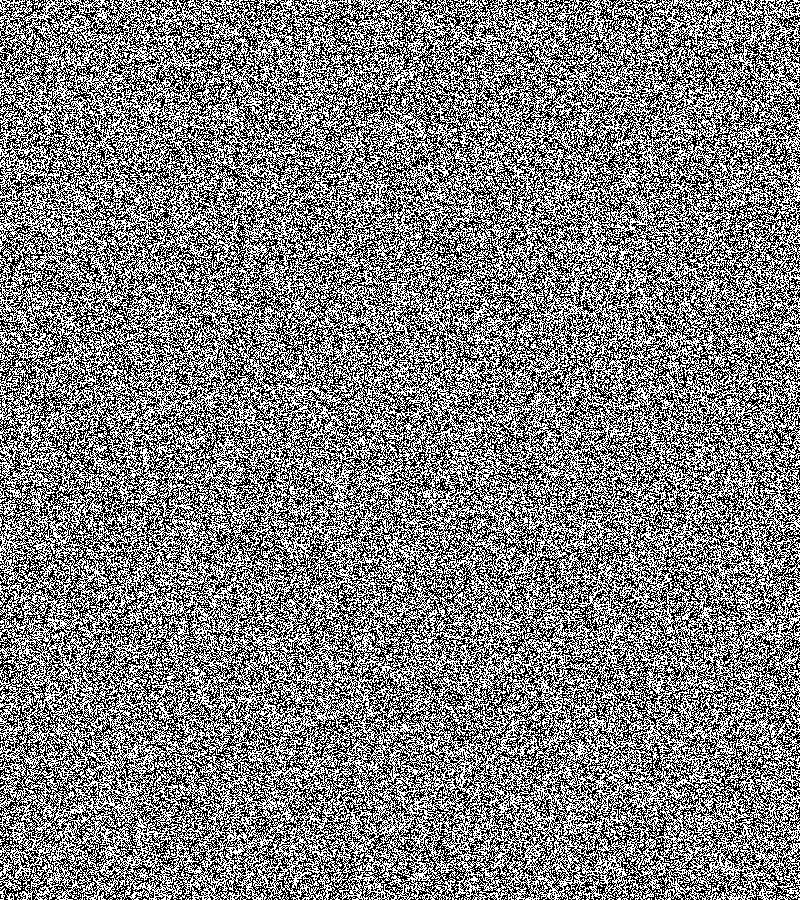 Sound track of randomness:
Before computers: book of one million random digits.